How we measure
Car makers publish one number for boot space: litres. It is measured by filling the boot with small blocks, so it describes volume and nothing about shape. Two cars with identical litre figures can take completely different objects.
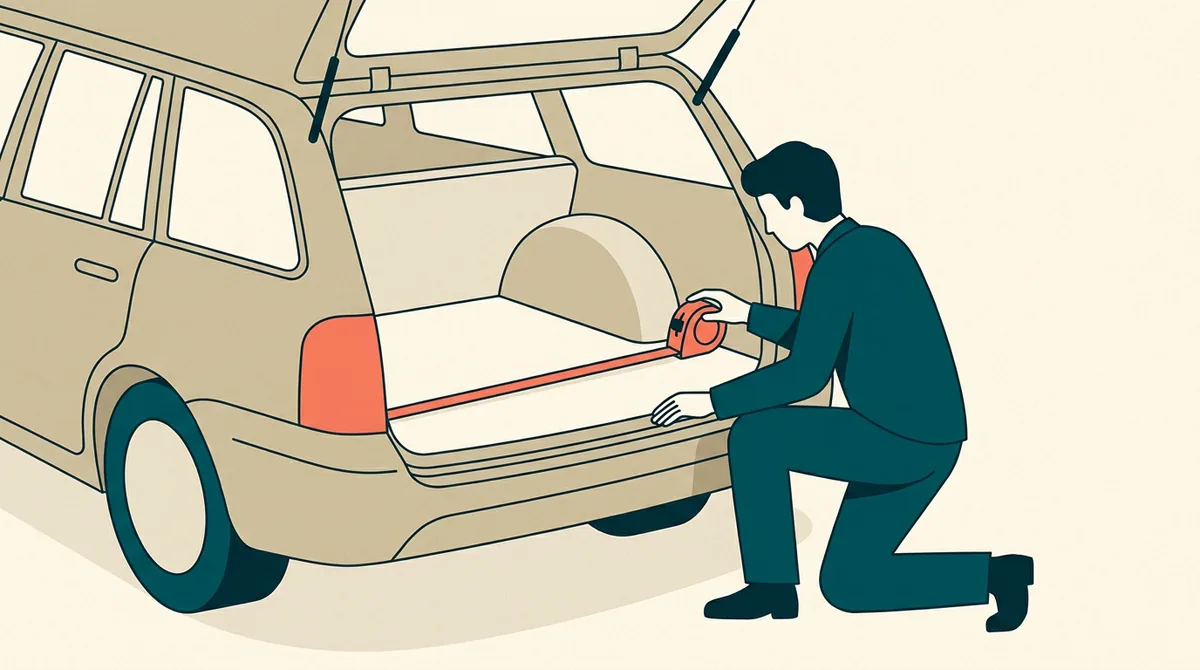
The three measurements
- Depth. From the tailgate opening to the rear seat backs, along the boot floor, with the seats in their normal upright position.
- Width between the wheel arches. The narrowest point of the floor, between the humps that cover the rear wheels. This is the measurement that stops most objects and the one nobody publishes.
- Height to the parcel shelf. From the boot floor to the underside of the cover. If the boot has a height-adjustable floor, we use the lower setting.
Where the numbers come from
Every car on this site is measured by km77, who physically measure each car they road test instead of repeating the manufacturer's brochure. We record their figures, the model year they tested, and link to the page. Where a car has sliding or split rear seats we take the shortest depth, because that is the honest worst case.
We do not estimate. If a measurement is not published anywhere we can verify, the car is not on the site.
How the fit check works
- The boot and the object are both treated as boxes. We try all six orientations of the object.
- If the object has a second, smaller published fold — wheels off, seat removed — we try that too, and say so in the result.
- Fits with room to spare means at least 8 cm of clearance on every axis. Fits, but only just means it goes in with less. Doesn't fit means no orientation works.
- We do not allow diagonals, do not squeeze into rounded corners, and never assume you fold a rear seat or remove the parcel shelf.
That last point makes the answers cautious on purpose. Plenty of things we call "only just" will go in fine with a shove. Nothing we call a fit should surprise you in the car park.
Boot or trunk?
Same thing. British English says boot, American English says trunk, and the search engines treat them as different words. We use both, and every measurement appears in centimetres and inches so you never have to convert.